What is a dry dock? A dry dock is a specialized basin that gets flooded so a vessel can float in, then drained so it rests dry for maintenance and repair. If you keep a boat on Southwest Florida waters, you know what salt, marine growth, and tide shifts do to a hull left sitting in the water.
Understanding dry docks helps you plan the deep maintenance your boat lift can’t handle. Here’s how they work and how they fit your waterfront setup.
What Is a Dry Dock?
A dry dock is a specialized basin or structure that can be flooded to let a ship enter and then drained so the vessel rests on a dry platform. The process is straightforward once you break it down:
- Flooding: Water fills the dock until the inside and outside levels match.
- Entry: A ship moves inside and positions itself over support blocks.
- Draining: Pumps remove the water, leaving the ship resting securely on the blocks.
- Reflooding: Water is let back in when work finishes so the ship can float away.
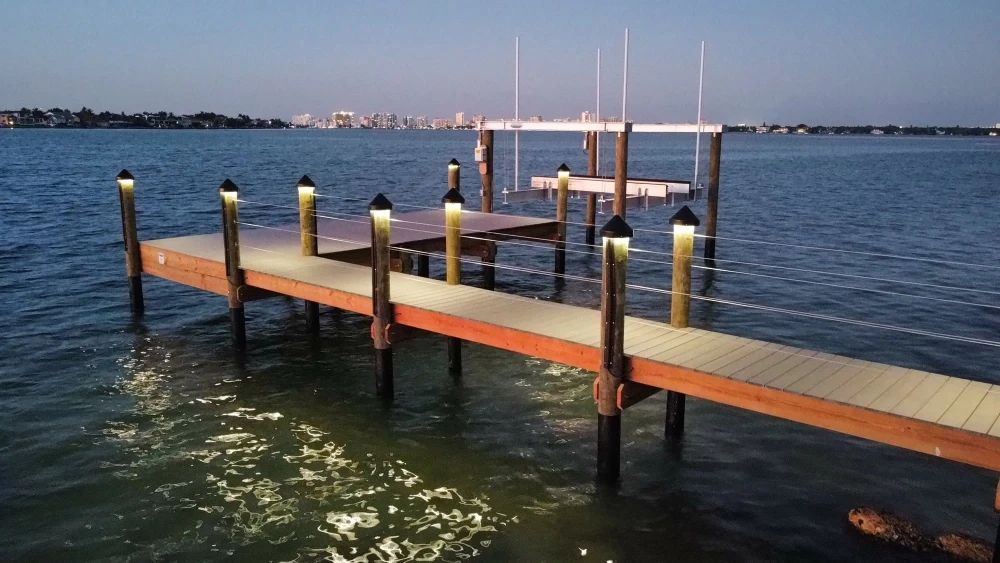
Dry docks serve several critical maintenance functions that keep vessels safe and compliant:
- Hull Repair: Fixing damage to the parts of a ship normally underwater.
- Cleaning and Painting: Removing marine growth and applying protective anti-corrosion coatings.
- Inspections: Checking rudders, propellers, and valves for regulatory compliance.
Types of Dry Docks Used in Marine Construction
The types of dry dock structures vary depending on water depth, property boundaries, and vessel size. Here are the five most common systems we see in marine construction.
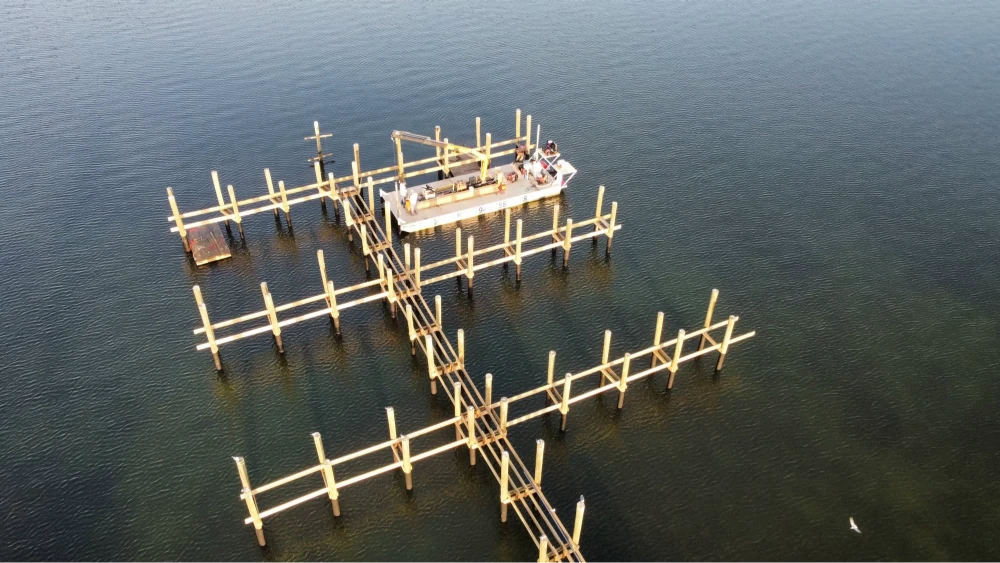
- Vertical / Cradle Lifts: Four-post or piling-mounted steel structures that use cables or hydraulic power to lift a boat straight up. These work best for standard water depths, fixed docks, and heavy multi-engine vessels.
- Floating Boat Lifts: Air-filled polyethylene tanks that submerge slightly to let a boat float on, then use an electric or solar pump to push out water and elevate the hull. These are ideal for fluctuating water levels and deep-water locations.
- Elevator Lifts: Track-mounted systems bolted to a seawall or piling at an angle rather than hanging from overhead beams. They fit narrow canals, tight slips, or restricted property boundaries.
- Drive-On PWC / Jet Ski Ports: Low-profile plastic ramps with rollers that allow personal watercraft to slide directly out of the water. Great for quick access and minimal mechanical maintenance.
- Cantilever Lifts: Pivot-arm hoists manually or electrically operated, well-suited for shallow water and smaller boats or lightweight craft.
Key Distinctions Between Dry Docks and Residential Boat Lifts
Dry docks and residential boat lifts differ significantly in purpose, scale, and operation. Understanding these differences helps you choose the right solution for your waterfront property.
|
Dry Docks |
Boat Lifts | |
|
Purpose and Scale |
Designed for large commercial vessels, cargo ships, or yachts. Used for heavy repairs, painting, and inspections. |
Built for private homeowners and small recreational boats. Used for everyday storage and easy access to the water. |
|
Operation Mechanism |
Water is pumped out of a massive concrete basin after the ship enters. The vessel rests on structural blocks on the floor. |
Electric motors, cables, or hydraulic arms lift the boat up using a cradle and bunks above the water line. |
|
Installation and Cost |
Permanent shipyard structures requiring multi-million-dollar engineering projects. |
Modular units attached to private docks costing a few thousand to tens of thousands of dollars. |
Inside a Dry Dock: Step-by-Step Operation Process
Dry dock operations follow a careful sequence from preparation through undocking. Each step requires precision and adherence to safety standards.
Step 1: Preparation and Planning
Before a vessel arrives, the crew handles three critical tasks:
- Light condition: Remove extra cargo and unnecessary weight so the ship floats at a lighter draft.
- Keel blocks: Arrange heavy support blocks on the dock floor based on the ship’s official docking plan.
- Stability check: Ensure the ship has proper stability and a slight trim (usually lower at the stern).
Step 2: Arrival and Positioning
Tugboats and shore winches guide the vessel slowly into position following Occupational Safety and Health Administration (OSHA) guidelines. The crew aligns the ship precisely over the submerged keel blocks before the water level drops.
Step 3: Pumping Out the Water
Once the ship is in position, operators seal the heavy dock gates tightly. Pumps drain the basin gradually over 12 to 24 hours.
As the water disappears, the ship settles safely onto the wood or concrete keel blocks.
Step 4: Inspection and Repairs
With the vessel secured on blocks, technicians can access the entire hull:
- Hull cleaning: Wash, sandblast, or high-pressure water jet the hull to remove marine growth and old paint.
- Checking damage: Inspect plates for cracks, rust, and measure steel thickness.
- Servicing parts: Repair propellers, rudders, sea valves, and coat the hull with protective paint.
Step 5: Flooding and Undocking
When work finishes, the team slowly lets water back into the basin until the ship floats on its own buoyancy. Tugboats guide the freshly serviced vessel out of the dock and back to regular service.
Triton Dock & Pier’s Expertise in Complementary Waterfront Solutions
Your dock and boat lift system plays a key role in how efficiently your vessel moves to and from dry dock facilities. At Triton Dock & Pier, we design dock systems that facilitate easy vessel transport to dry docks, with layouts that accommodate trailering and loading needs.
Our boat lift systems reduce the frequency of dry dock visits needed. By keeping your hull dry between outings, you slow marine growth and corrosion, extending the time between professional haul-outs.
We also incorporate custom features based on your dry dock maintenance schedule, such as reinforced lift capacity for scheduled haul-outs or easy-load configurations.
Our team advises on dry dock timing based on seasonal water conditions along the Gulf Coast. We know when tides, storm patterns, and water temperatures affect maintenance needs in Southwest Florida.
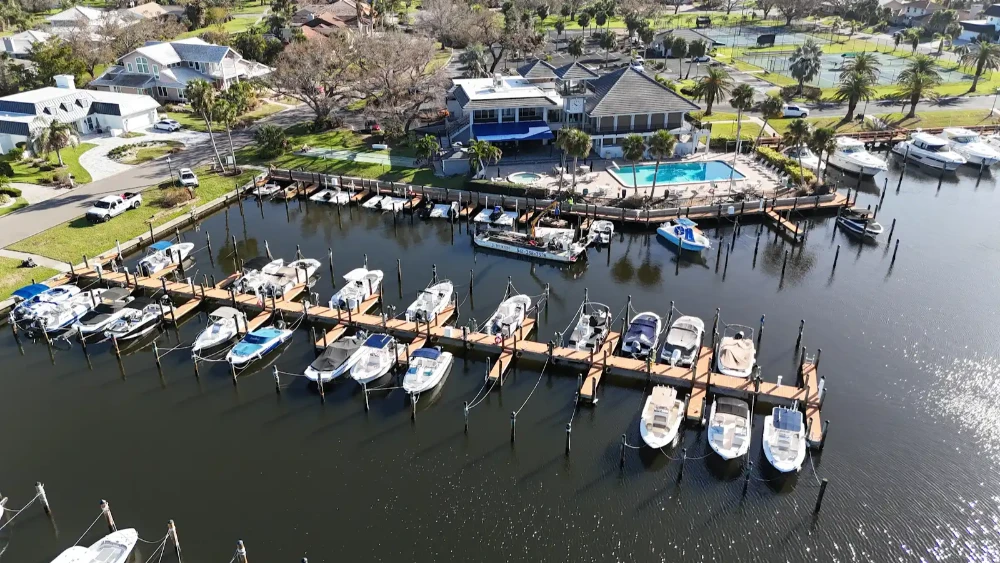
With over 50 years of combined experience protecting Gulf Coast waterfront investments, we help homeowners plan their complete vessel care strategy.
Protecting Your Waterfront Investment
Dry docks provide essential maintenance access that protects your vessel investment. When you understand when and why to use dry docks, that knowledge complements your daily boat lift usage and keeps your boat in top condition year-round.
Professional waterfront infrastructure from Triton Dock & Pier supports your complete maintenance strategy. Partner with our experienced team for custom docks, reliable boat lifts, and storm-tested seawalls.
Call us at 941-258-2528 or visit tritondockandpier.com for a free estimate on your waterfront project.
FAQs
Here are answers to common questions about what is a dry dock and how it relates to your waterfront property.
Q: How often should a boat go to dry dock?
A: Most recreational vessels benefit from dry dock inspection every two to three years, or when you notice performance issues like increased fuel consumption or vibration. Commercial vessels follow stricter regulatory schedules set by classification societies.
Q: Can I use a boat lift instead of a dry dock?
A: A boat lift handles routine storage and light maintenance, but it cannot replace dry dock services for major hull work, bottom painting, or structural repairs. Think of your lift as everyday protection and dry dock as periodic deep maintenance.
Q: What is the difference between wet slip and dry storage?
A: A wet slip keeps your boat in the water full-time, offering immediate access but constant exposure to marine growth and corrosion. Dry storage keeps the vessel out of water when not in use, reducing maintenance but requiring launch time.
Q: Do I need a permit to install a boat lift at my dock?
A: Yes, most marine construction projects in Florida require local and environmental permits before installation. We handle the paperwork as part of our full-service approach from permit to punch list.