How do you tie a boat to a dock securely without making the process more complicated than it needs to be? With the right combination of dock lines, fenders, and secure attachment points, you can keep your boat in position while allowing for normal movement from wind, wakes, and changing water levels.
The process is straightforward once you understand what each line does. In Southwest Florida, where wind, wakes, and changing tides can affect a boat at the dock, a thoughtful setup matters even more.
How to Tie a Boat to a Dock Step by Step
So, how do you tie a boat to a dock?
1. Position the Boat Alongside the Dock
Bring the boat alongside the dock slowly and leave enough room for your fenders to sit between the hull and the dock.
Pay attention to wind, current, and boat traffic as you approach. Your goal is to settle the boat into a stable position without relying on the dock to stop your momentum.
Have your dock lines ready before the boat reaches the dock. This makes the process smoother and gives you more control once you are alongside.
2. Place Your Fenders Before Tightening the Lines
Fenders create a cushion between your boat and the dock. Place them at the points where the hull is most likely to come into contact with the dock.
Check that the fenders are positioned at the right height and are not sitting too high or low. Once the boat is secured, make sure they are still protecting the hull rather than slipping underneath it.
3. Secure the Bow Line
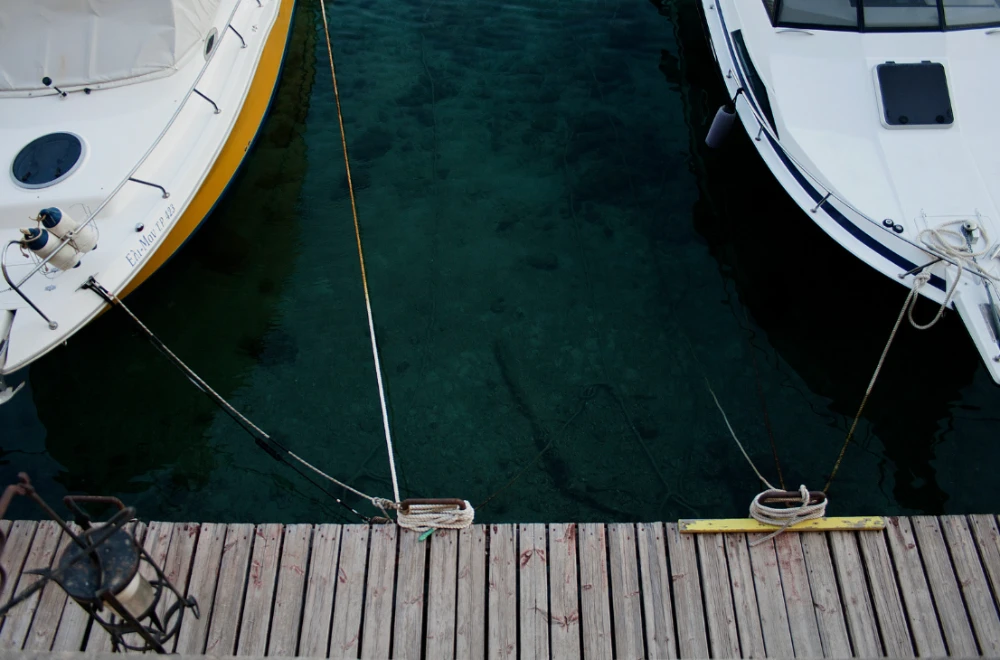
The bow is the front part part of the boat. A bow line runs from the front of the boat to a secure dock cleat or piling.
This line helps control the front of the boat and keeps it alongside the dock. Leave enough length for normal movement rather than pulling the line as tight as possible.
4. Secure the Stern Line
The stern is the rear of the boat. A stern line helps control the back of the vessel and keeps it from drifting too far forward or backward.
Use a secure cleat or piling and make sure the line leads cleanly from the boat to the dock. A good bow-and-stern setup establishes the boat’s basic position before you add additional lines.
5. Add Spring Lines to Control Forward and Backward Movement
Spring lines help limit the boat’s movement along the dock.
A forward spring line helps prevent the boat from moving backward, while an aft spring line helps prevent it from moving forward. Together with the bow and stern lines, they create a more stable setup.
Spring lines become especially useful when the boat will stay at the dock for longer periods. In tidal water, make sure the lines have enough working length to accommodate changes in water level.
6. Finish Each Line with a Secure Cleat Hitch
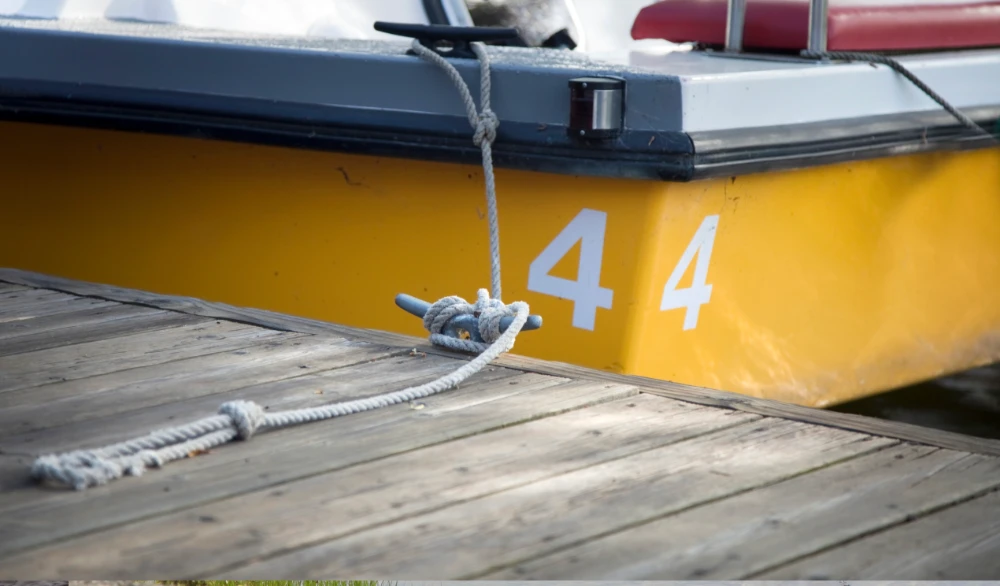
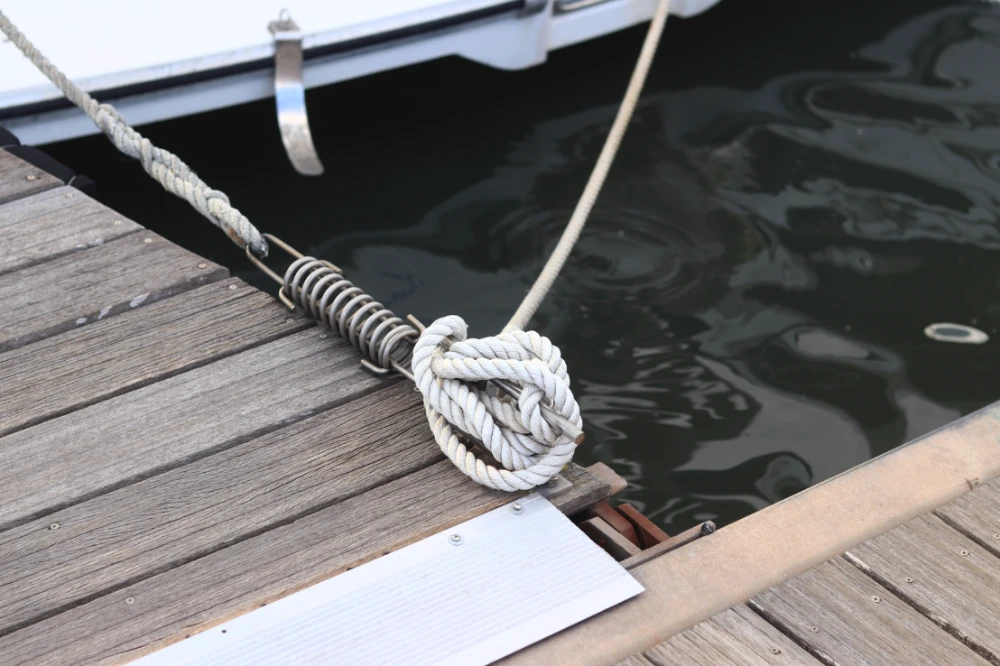
A cleat hitch is a common knot used to secure a dock line to a cleat. It is designed to hold the line securely while still allowing you to release it when you are ready to leave.
Start by wrapping the line around the base of the cleat. Then create a figure-eight around the horns and finish with a half hitch to lock the line in place.
Keep the wraps neat and check the finished hitch before stepping away from the dock.
7. Check the Boat’s Position Before You Walk Away
Take a final look at the entire setup before leaving the boat.
Make sure the bow and stern lines are secure, the spring lines are positioned correctly, and the fenders are protecting the hull. The boat should have enough freedom to respond to ordinary movement without drifting excessively.
In tidal areas, the lines also need enough slack to allow the boat to rise and fall with the water level.
What Do Bow, Stern, and Spring Lines Actually Do?
Understanding each line makes it much easier to know how do you tie a boat to a dock in a way that keeps the vessel properly positioned.
| Dock Line | Main Purpose |
| Bow Line | Controls the front of the boat and helps keep it alongside the dock |
| Stern Line | Controls the rear of the boat and helps maintain position |
| Forward Spring Line | Helps prevent the boat from moving backward |
| Aft Spring Line | Helps prevent the boat from moving forward |
How Tight Should Dock Lines Be?
Dock lines should be snug, not overly tight. They need enough flexibility to absorb normal movement from waves, wakes, wind, and changing water levels.
Lines that are pulled too tightly can place unnecessary strain on cleats, pilings, and other connection points. In tidal water, the setup also needs enough slack for the boat to rise and fall naturally.
Common Mistakes to Avoid When Tying a Boat to a Dock
1. Using Only One Line
A single line cannot control the boat in every direction. Using multiple attachment points gives you better control over forward, backward, and sideways movement.
2. Pulling Every Line Too Tight
A dock line should hold the boat securely without making the setup rigid. Some movement is normal, especially in water affected by waves or tides.
3. Forgetting Spring Lines
Bow and stern lines establish the boat’s position, while spring lines help control movement along the dock. Leaving them out can allow more forward and backward movement than you expect.
4. Placing Fenders in the Wrong Position
Fenders only help when they are positioned where the hull may contact the dock. Check their height and placement after the boat settles into position.
5. Treating Everyday Docking Like Storm Preparation
Everyday dock lines are designed for normal docking conditions. They are not a substitute for a proper storm plan.
Strong winds, storm surge, and heavy waves can create conditions far beyond normal dock use. Follow appropriate local guidance when preparing your waterfront for severe weather.
Make Sure Your Dock Works for the Way You Boat
Knowing how do you tie a boat to a dock is important, but the design of the dock itself also affects how easily you use your waterfront.
Cleat placement, dock width, access points, water depth, and the location of a Boat Lift can all shape your everyday boating routine.
At Triton Dock & Pier, we build custom Docks around your property, water conditions, and how you use your waterfront. Our approach considers the shoreline, layout, structural requirements, and practical details that make a dock easier to use every day.
Planning a dock that works better for your boat and daily routine? Talk to Our Team or Get a Free Estimate. Call 941-258-2528.
FAQs
What is the best way to tie a boat to a dock?
Use a combination of bow, stern, and spring lines, with properly positioned fenders. The exact setup depends on your boat and dock layout.
Do you need spring lines when tying a boat to a dock?
Spring lines help control forward and backward movement along the dock. They can be particularly useful when a boat will remain docked for longer periods.
How much slack should you leave in dock lines?
Leave enough slack for normal movement and, where applicable, changes in water level. Lines should be secure without being pulled excessively tight.
What knot should you use to tie a boat to a dock cleat?
A cleat hitch is commonly used for securing a dock line to a cleat. It holds securely while remaining easy to release when you are ready to leave the dock.