Walk any canal in Venice or Englewood and you will notice that not every seawall looks the same. Some are flat concrete panels with a wide cap, some are ribbed vinyl, and some are sloped banks of rock. Those differences matter. The types of seawalls you see along the water each handle soil pressure, waves, and storms in their own way, and choosing the wrong one for your shoreline can shorten its life by years.
What a Seawall Does and How It Holds the Line
A seawall is a structure built along a shoreline to stop erosion and protect land from waves and tides. On most Southwest Florida properties, it also acts as a retaining wall, holding back the soil in your yard so it doesn’t slump into the canal.
Before comparing types of seawalls, it helps to know the parts most residential walls share:
- Panels or sheet piles: The vertical face of the wall, driven or set into the bottom so a good portion sits below the mudline.
- Cap: The concrete top of a seawall that ties the panels together and gives the wall a finished edge.
- Tiebacks and deadman: Steel rods that run from the cap back into your yard, where they connect to a buried concrete block (the deadman) that resists the wall leaning outward.
- Weep holes and filter fabric: Drainage openings and fabric that let water pass through while keeping soil in place, which relieves pressure behind the wall.
- Toe: The soil or rock at the base of the wall on the water side, which keeps the bottom of the wall from kicking out.
When one part fails, the whole wall is at risk, so structure matters as much as material.
The Main Types of Seawalls by Structure
Engineers usually group the types of seawalls by how they resist the forces pushing on them. Vertical walls generally fall into three groups: cantilevered, anchored, and gravity. Sloped revetments and natural shorelines round out the list.
Cantilevered Sheet Pile Walls
A cantilevered wall has no tiebacks. It stays upright because the sheet piles are driven deep enough that the buried portion resists the pressure on the exposed portion. Vinyl, steel, aluminum, and composite sheet piles are common choices.
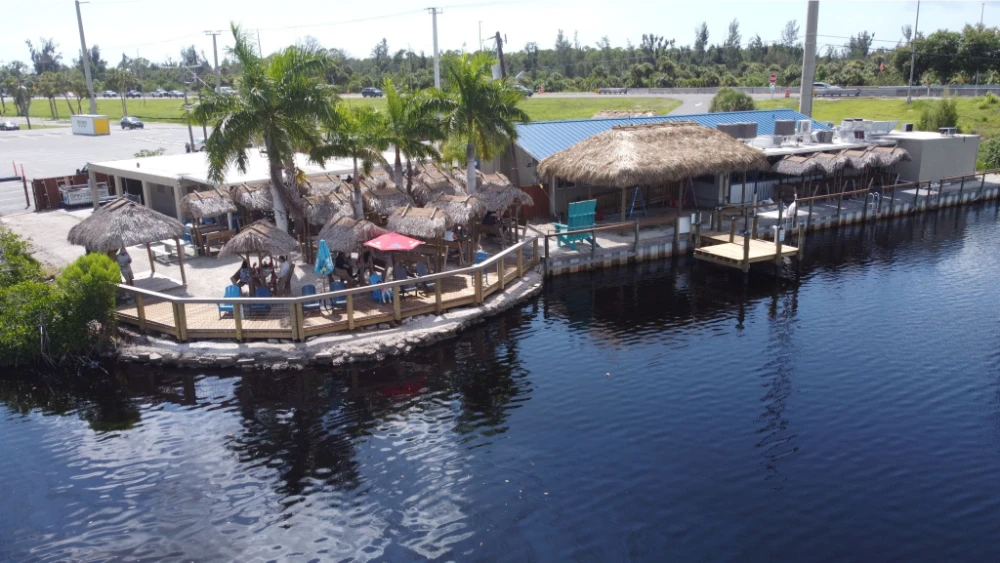
These walls work best where the exposed height is modest, and the bottom allows deep embedment. In areas with shallow limestone, getting enough depth can be difficult, which often pushes the design toward an anchored wall.
Anchored Seawalls
Of all the types of seawalls on Southwest Florida canals, anchored walls are the most familiar. Concrete panels or sheet piles form the face, a poured cap ties them together, and tiebacks run back to deadmen buried in the yard. It’s the setup you’ll find along many residential canals in Southwest Florida.
The anchor lets the wall handle taller soil loads without relying only on embedment. The trade-off is that the tiebacks become a critical component. If they corrode or the deadman shifts, the cap can twist, and the panels can tilt.
King Pile and Panel Walls
Some concrete walls use heavy vertical piles (often called king or soldier piles) spaced along the shoreline, with panels spanning between them. The piles carry much of the load, and a cap connects everything at the top.
This design adds stiffness where soil is uneven, or loads are heavy.
Gravity Seawalls
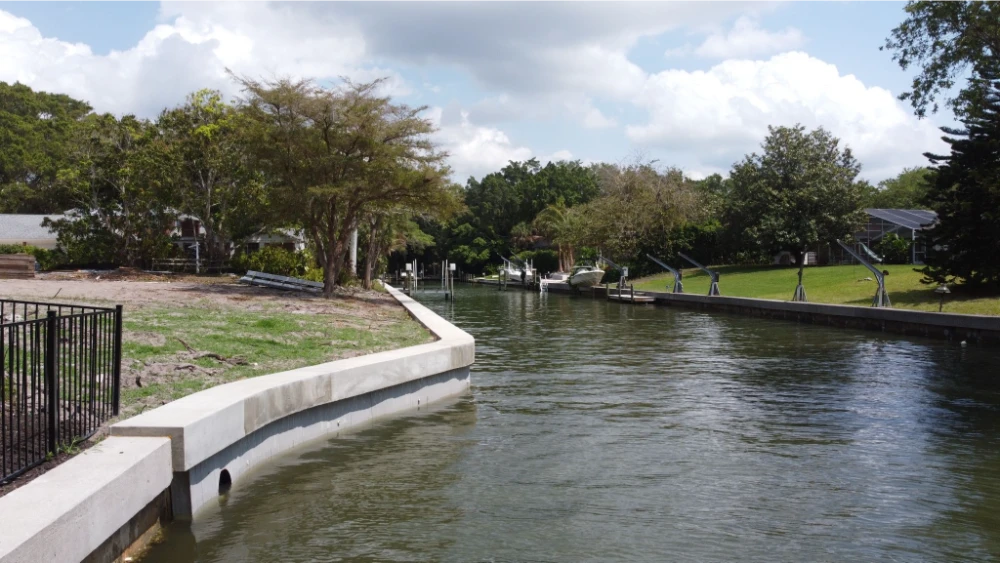
A gravity wall relies on its own weight to stay in place. Examples include massive concrete sections and stacked stone. They are common on open coastlines and public works projects but less common on residential canal lots, where space and access are tight.
Riprap Revetments
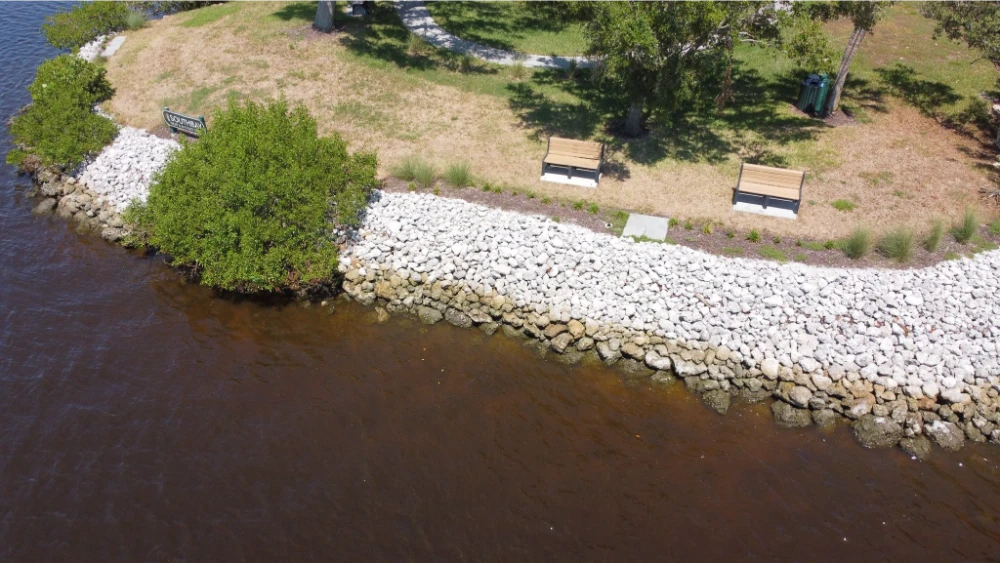
A riprap revetment is one of the few types of seawalls that slope instead of standing upright. Large stone is placed over smaller stone or filter fabric, and the uneven surface breaks up wave energy instead of reflecting it.
Riprap is also used at the base of existing vertical walls as toe protection. On a property where the bottom in front of the wall keeps washing out, a stone toe can buy a vertical wall many more years.
Living Shorelines and Hybrid Designs
A living shoreline uses natural elements such as native plants, oyster reefs, or shell to stabilize the bank. A hybrid design pairs those elements with a hard structure like a low rock sill.
Living shorelines need space and lower wave energy to work, so they suit some bay and estuary properties better than narrow canals. Permitting for these projects can differ from a traditional seawall, and our team can walk you through what applies to your property.
Types of Seawalls by Face Shape
Beyond structure, types of seawalls are also described by the shape of their face:
- Vertical: The standard for residential canals. It uses the least space and allows boats to moor right against the wall.
- Curved or recurved: Shaped to turn waves back toward the water. Mostly found on open coastlines.
- Stepped: A series of ledges that break up wave energy and can double as access to the water.
- Sloped: Revetments and living shorelines fall here, trading space for better energy absorption.
Seawall Materials at a Glance
Structure and material go hand in hand. The table below shows which types of seawalls each material commonly appears in. For a full comparison of lifespan, maintenance, and cost ranges, read our guide on how to select seawall materials for Florida’s coast.
| Material | Common Structural Types | Notes for Southwest Florida |
| Concrete | Anchored panel, king pile, gravity | Strong and familiar on canals; watch for rust stains that signal corroding steel inside |
| Vinyl | Cantilevered or anchored sheet pile | Won’t rot or rust; can be harder to drive into rocky bottoms |
| Steel | Cantilevered or anchored sheet pile | Very strong; needs corrosion protection in saltwater |
| Timber | Anchored bulkhead | Lower upfront cost; vulnerable to rot and marine borers |
| Stone | Riprap revetment, toe protection | Absorbs wave energy; needs more shoreline space |
How to Choose Between Types of Seawalls in Southwest Florida
No single design wins everywhere. These are the factors we weigh when comparing types of seawalls for a property:
- Wave exposure. A quiet residential canal and an open stretch of bay facing boat wakes and storm chop put very different loads on a wall.
- Soil and rock. Shallow limestone can limit how deep sheet piles go, which affects whether a cantilevered wall is practical.
- Space behind the wall. Anchored walls need room for tiebacks and deadmen. Pools, patios, and utilities can complicate that layout.
- Neighboring walls. On a canal, your wall typically needs to tie in cleanly with the walls on either side, both in alignment and in cap height.
- Permitting path. Under FDEP rules, some replacements and some new walls between existing walls may qualify for exemptions, while other projects need a full review. Local county and city permits apply too.
- Dock and boat lift plans. If you plan to add or rebuild a dock or lift, the seawall design should account for it from the start.
- Long-term cost. The cheapest wall to build is not always the cheapest to own.
Repair, Reinforce, or Replace?
If you already have a seawall, comparing types of seawalls may only matter if replacement is truly on the table. Many walls can be reinforced instead.
Common warning signs include:
- Sinkholes or soil loss behind the wall
- Gaps opening between panels
- Cracks in the cap that are widening or showing rust stains
- Panels or the cap leaning toward the water
- Standing water behind the wall after rain
Depending on what we find, reinforcement options can include a jet filter drain (a drainage system that relieves water pressure behind a seawall), a manta ray anchor (a deep-set earth anchor that adds pull-back strength to an existing wall), cap repair, or riprap at the toe. On one HOA project, our team repaired 540 feet of seawall using jet filter drains, manta ray anchors, and cap repair instead of a full rebuild.
How Triton Dock & Pier Approaches Your Seawall
At Triton Dock & Pier, we don’t recommend a wall type until we’ve walked your shoreline. We look at the water, the soil, any existing wall, and how you use your property.
Our team brings over 50 years of combined marine and general construction experience to every project. We build several types of seawalls, including vinyl, concrete, and timber systems, riprap shoreline protection, and land-based retaining walls, and we handle permitting from application through final walkthrough. You can see the full scope on our Seawalls service page.
If your wall needs work rather than replacement, our Repairs team will explain what can be fixed and what can’t. We only recommend what your property actually needs.
Finding the Right Type of Seawall for Your Shoreline
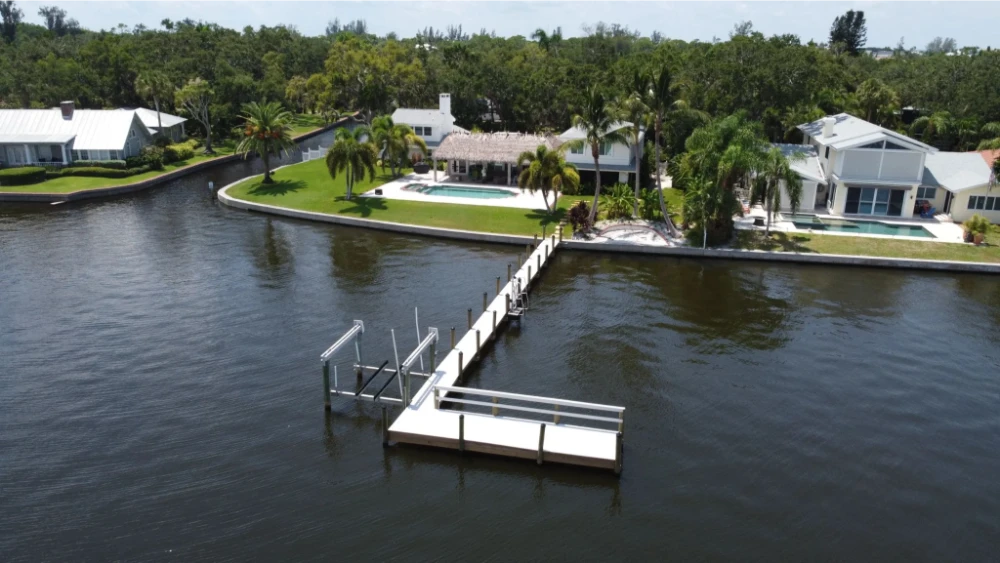
Understanding the types of seawalls helps you ask better questions, but the right choice still comes down to your specific shoreline. Wave exposure, soil, space, neighboring walls, and permits all shape what will hold up for decades in Southwest Florida.
If you’re weighing types of seawalls for a property from Boca Grande to Anna Maria, Triton Dock and Pier is happy to take a look. Request a free estimate or call us at 941-258-2528 to talk to our team.
Frequently Asked Questions About Types of Seawalls
What is the most common type of seawall in Southwest Florida?
On residential canals, anchored walls are the most familiar: concrete panels or vinyl sheet piles with a poured cap and tiebacks to a buried deadman. The best fit for your property still depends on site conditions.
What is the difference between a seawall and a bulkhead?
The terms are often used interchangeably. Technically, a seawall is built mainly to resist waves, while a bulkhead mainly holds back soil in calmer water. Most residential canal walls do a bit of both.
Do I need a permit to build or replace a seawall?
In most cases, yes. Seawall projects usually involve local building permits and state or federal environmental review. Some replacements qualify for exemptions. We handle the paperwork as part of our seawall services.
Which types of seawalls last the longest?
Service life depends on the material, the structural design, the installation quality, and how well the wall is maintained. Our seawall materials guide breaks down typical lifespans by material.
Can I add riprap in front of my existing seawall?
Often, yes. Riprap at the toe can protect the base of a vertical wall from scour. It typically needs a permit or a verified exemption, and the stone has to be sized and placed correctly to help rather than harm.
Are small cracks in a seawall cap normal?
Fine hairline cracks are common in concrete as it cures. Cracks that grow, separate, or show rust staining can point to corroding steel inside and should be inspected.