The most dependable seawall materials for Florida’s coast are vinyl and concrete for most residential shorelines, steel for heavy-duty and deep-water applications, and riprap for low-energy zones; the right fit depends on your wave exposure, soil, and budget.
Seawalls protect waterfront properties from erosion, wave damage, and storm surge, and the materials you choose directly determine durability, maintenance, and lifespan.
This guide explains each option in straightforward terms so you can protect your waterfront investment with confidence.
Common Types of Seawall Materials
Here is how the five most common seawall materials compare before we get into the details.
| Material | Lifespan | Installed Cost (per Linear Foot) | Maintenance | Best Suited For |
| Concrete | 30–50+ years | $200–$600+ | Moderate | High-wave shorelines |
| Vinyl | 50–60+ years | $200–$550 | Very low | Residential saltwater shorelines |
| Steel | 25–35 years | $200–$600 | Moderate to high | Deep water, heavy loads |
| Riprap & Boulders | 30–50+ years | $50–$200 | Periodic | Low-energy, natural shorelines |
| Wood | 10–40 years | $150–$500 | High | Budget-focused projects |
Concrete
A concrete seawall is a heavy, reinforced wall built along a shoreline to shield coastal land from waves, flooding, and erosion, the dependable pick where wave action is serious.
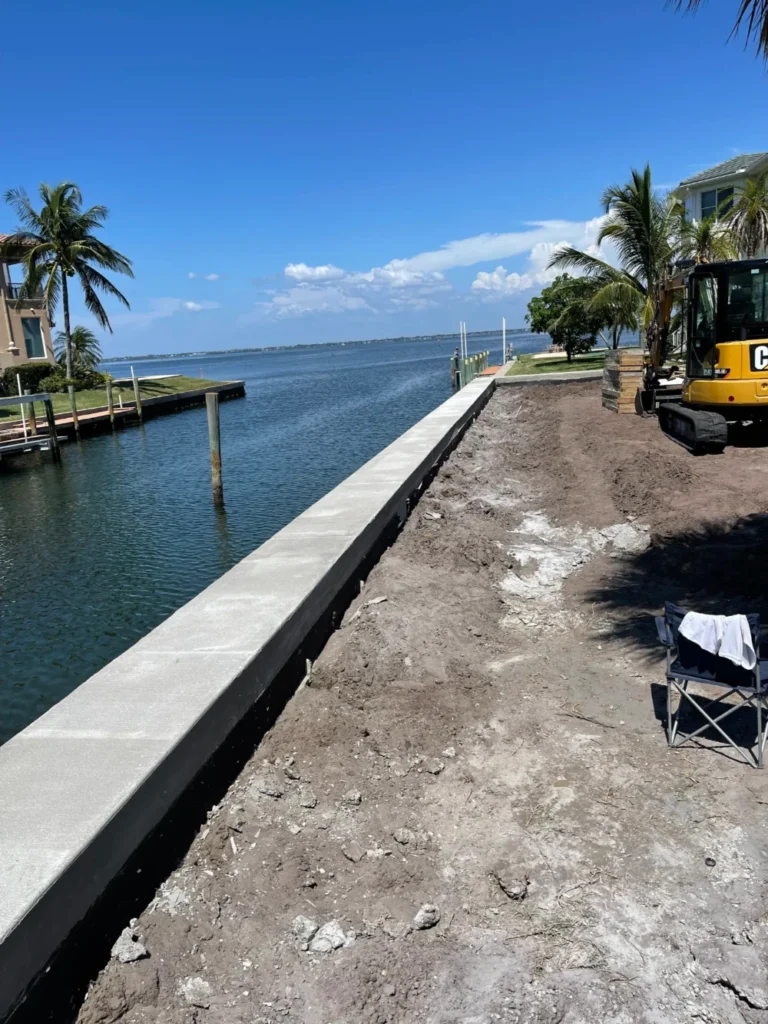
Pros:
- High durability: Exceptional resistance to severe wave action, currents, and storm surge.
- Solid appearance: A clean, permanent, structural look.
- Low daily upkeep: Very little routine maintenance when properly engineered.
Cons:
- High initial cost: Expensive to engineer, permit, and install.
- Wave reflection: Rigid surfaces push wave energy downward, scouring soil at the wall’s base.
- Cracking risk: Shifting soil or trapped water pressure can crack the wall if drainage fails.
A well-engineered wall lasts 30 to 50+ years, though saltwater can corrode the internal steel reinforcement if the surface is left unsealed. Plan on yearly checks for cracks, rust stains, and clogged weep holes (drainage openings that relieve water pressure behind the wall).
Installed costs run $200–$600+ per linear foot, depending on height, site access, and permits.
Vinyl
A vinyl seawall is a synthetic sheet-piling system: rigid, high-impact PVC panels that interlock, drive deep into the ground, and tie back to buried anchors and structural beams.
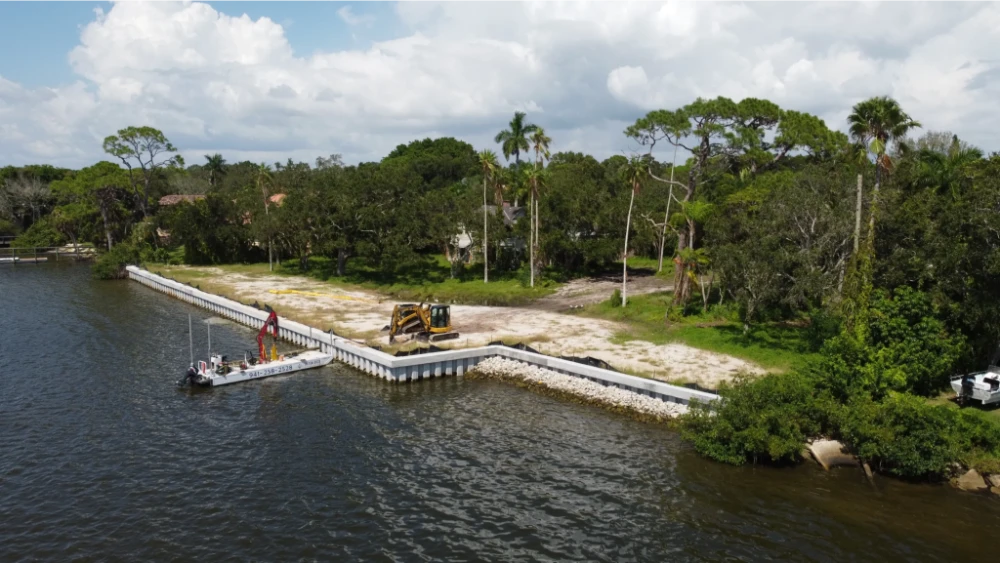
Pros:
- Corrosion-proof: Vinyl cannot rot, rust, or corrode in saltwater or fresh water.
- Long-lasting: Expect 50 to 60+ years of service, far beyond timber.
- Very low maintenance: An occasional rinse and a periodic tieback hardware check.
- Clean and safe: Holds its bright color, and the smooth surface is safe for boats and swimmers.
- Pest-proof and eco-friendly: Marine borers cannot touch it, and it leaches no preservatives into the water.
Cons
- Lower structural strength: Not ideal for high-energy wave environments or massive commercial loads.
- Heat sensitivity: Can warp or soften under extreme, prolonged direct heat or fire exposure.
- Installation limits: Harder to drive into very rocky or dense soils without damaging the panels.
Installed costs run $200–$550 per linear foot, more than wood, less than concrete or steel.
Steel
A steel seawall uses interlocking corrugated sheet piling driven deep into the ground to hold back soil against heavy wave erosion.
Pros:
- Exceptional strength: Handles heavy loads, severe weather, and high-impact commercial or deep-water applications.
- Versatile installation: Drives easily into almost any soil composition or hard substrate where other materials might fail.
- No height limits: Accommodates tall designs without losing structural integrity.
Cons:
- Vulnerable to corrosion: Rusters quickly, especially when exposed to saltwater or harsh chemical environments.
- Heavy and complex installation: Requires heavy machinery like cranes and vibratory pile drivers.
- Industrial appearance: Looks utilitarian rather than natural.
Unprotected steel in saltwater averages 25 to 35 years, though galvanization, marine coatings, and sacrificial anodes (zinc or aluminum blocks that corrode in the wall’s place) extend that considerably.
Maintenance runs moderate to high: regular inspections for rust, joint separation, and anchor stability, plus coating work in the splash zone.
Installed costs run $200–$600 per linear foot, and the look is industrial rather than natural.
Riprap & Boulders
A riprap and boulders seawall is a sloping shoreline barrier of large natural stones stacked over smaller filter stone or geotextile fabric (a cloth layer that keeps soil from washing out), defending property by absorbing wave energy instead of reflecting it.
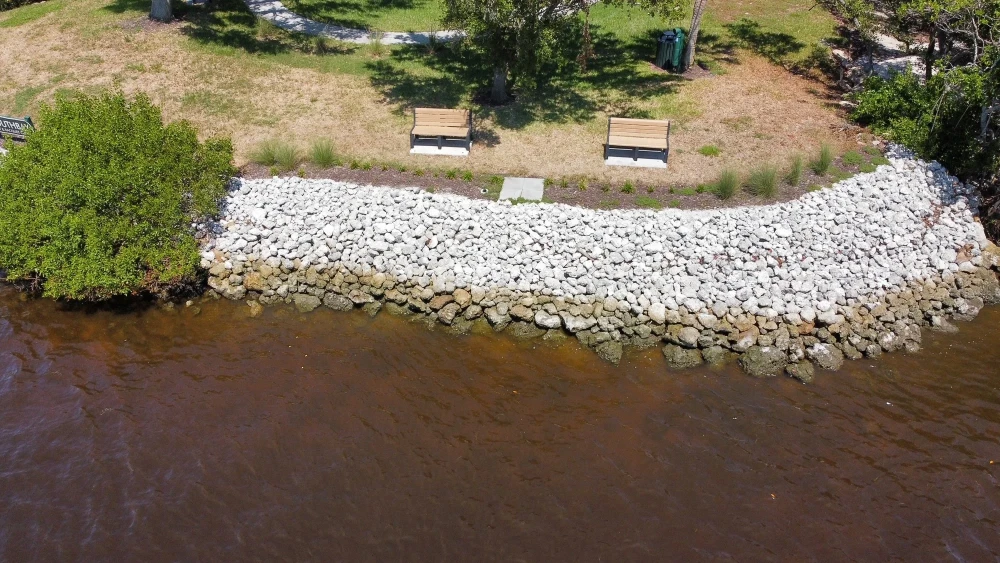
Pros:
- Energy absorption: The sloped profile breaks wave momentum gradually.
- Flexibility: Stone shifts with ground movement instead of cracking.
- Natural look: Blends into Gulf Coast shorelines and aquatic habitat.
- Durability: Expect 30 to 50+ years if the filter fabric stays intact.
Cons:
- Space Requirement: Sloped footprint takes up more land area than a vertical wall.
- Vermin Habitat: Gaps between rocks can attract rodents, snakes, or unwanted pests.
- Weed Growth: Weeds and brush can grow through the rocks and require clearing.
- Initial Access: Heavy machinery is needed to haul and place massive boulders.
Maintenance is periodic: repositioning storm-shifted stones, checking fabric, and clearing vegetation. At $50–$200 per linear foot installed, riprap is usually the most affordable option.
Wood
A wood seawall, also called a timber bulkhead, uses treated posts and planks to hold back soil and slow erosion.
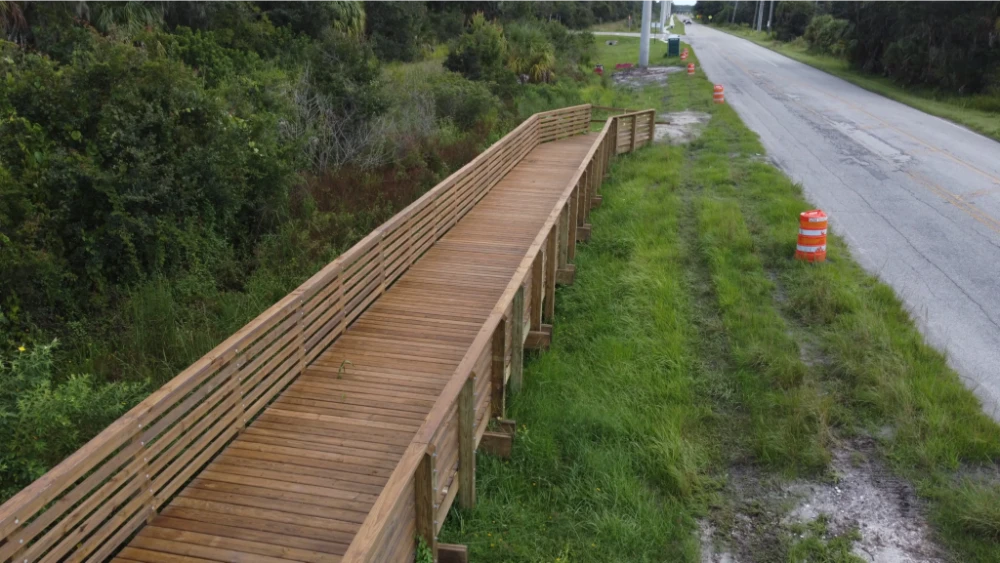
Pros:
- Natural look: Blends well with outdoor and natural environments.
- Lower upfront cost: Cheaper to build initially than concrete or steel.
- Easy installation: Requires less heavy machinery and specialized labor than concrete.
Cons:
- Rot and decay: Constantly exposed to moisture, causing the wood to break down.
- Pest vulnerability: Attracts marine borers and insects that eat or bore into the timber.
- Shorter overall life: Fails faster than modern synthetic or concrete alternatives. Expect 10 to 40 years with diligent care, less in saltwater.
Upkeep is the highest of any option: yearly checks for rotting boards, loose hardware, and shifting anchors, plus regular plank replacement to prevent soil washouts.
Costs run $150–$500 per linear foot installed, with saltwater sites at the higher end.
Triton Dock & Pier’s Custom Approach to Seawall Material Selection
At Triton Dock & Pier, we never recommend a material before we have walked your shoreline, because the right seawall materials depend on conditions unique to your property.
Here is how our approach works:
- We assess your shoreline first. Wave energy, water depth, soil type, tidal range, and any existing structure’s condition all shape what will hold up.
- We match materials to Southwest Florida conditions. Salt exposure, storm surge, and soft Gulf Coast soils favor certain systems on your stretch of water from Boca Grande to Anna Maria.
- We install marine-grade systems. Our vinyl and concrete seawall systems are engineered for this region’s tides and storms, the same storm-tested approach our docks and lifts have proven through back-to-back major hurricanes.
- We lean on 50+ years of combined experience. That background tells us when a wall needs reinforcement and when it truly needs replacement.
- We explain the trade-offs honestly. You hear real costs, lifespans, and upkeep demands for every option, with transparent pricing, no shortcuts.
Protecting Your Waterfront Investment with the Right Seawall Materials
Selecting seawall materials comes down to matching the material to your shoreline’s real conditions rather than chasing the lowest upfront price. Concrete, vinyl, steel, riprap, and wood each trade strength, cost, and upkeep differently against Florida’s waves, salt, and storms.
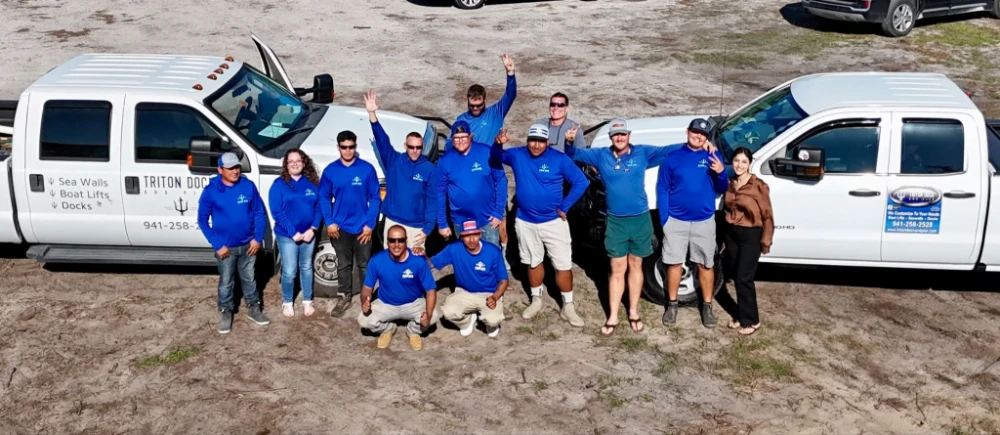
Professional guidance keeps that match honest, because an engineered recommendation accounts for Florida’s coastal environment in a way a brochure cannot. At Triton Dock & Pier, we provide honest assessments and custom seawall solutions across Southwest Florida.
Call us at 941-258-2528 for a free estimate on your seawall project and understand how to build a seawall.
FAQs
Here are straightforward answers to the questions homeowners ask us most about seawall materials.
Q: Do I need a permit to build a seawall in Southwest Florida?
A: Yes, most seawall Florida projects require local and environmental permits before installation begins. We handle the paperwork from application through approval.
Q: What are the warning signs of a failing seawall?
A: Watch for soil washout, cracked caps, leaning panels, and standing water behind the wall. Caught early, these usually mean smaller, cheaper repairs.
Q: How do I know which material fits my shoreline?
A: A site assessment is the only reliable way to tell. Wave energy, soil, and access conditions differ at every property, even between neighbors.