The different types of boat lifts include six common configurations: four-post cradle, elevator, beamless, floating, and platform lifts. They vary in structural design, vessel support, and lifting operation, making each suitable for different docking environments and boating needs.
Choosing the right option depends on your boat’s weight and dimensions, water depth, and dock layout. This guide breaks down how each configuration works, its practical applications, and the key factors to consider before installation.
Common Boat Lift Types and Designs Explained
Boat lifts raise watercraft above the water for storage, with designs that differ in vessel support, structural arrangement, and lifting movement. Understanding the different types of boat lifts makes it easier to compare cable-driven, hydraulic, and flotation-based systems.
The table below compares six of the most common types of boat lifts, their applications, and key installation considerations.
| Boat Lift Type | How It Works | Typical Application | Key Technical Consideration |
| Four-Post Cradle | Hoists a hull-supporting cradle vertically between four pilings | Permanent residential boat slips | Piling arrangement, load capacity, and bunk positioning |
| Elevator | Moves a supporting carriage along guide rails | Narrow canals and restricted dock layouts | Rail mounting and carriage clearance |
| Beamless | Elevates the vessel without the overhead beams found on traditional four-post lifts | Residential docks prioritizing open views and access | Piling support and overhead clearance |
| Floating | Uses controlled buoyancy or lifting equipment mounted on floating structures to lift vessels | Compatible floating docks and marinas | Flotation capacity, anchoring, and water movement |
| Platform | Allows compatible watercraft to move directly onto a supporting platform | Jet skis and compatible smaller boats | Hull compatibility, platform support, and stability |
Custom yacht lifts are also available for larger or specialized vessels, but they represent a tailored solution rather than a separate lifting configuration. Depending on the vessel and installation site, these systems may use a cradle, elevator, or other specialized designs.
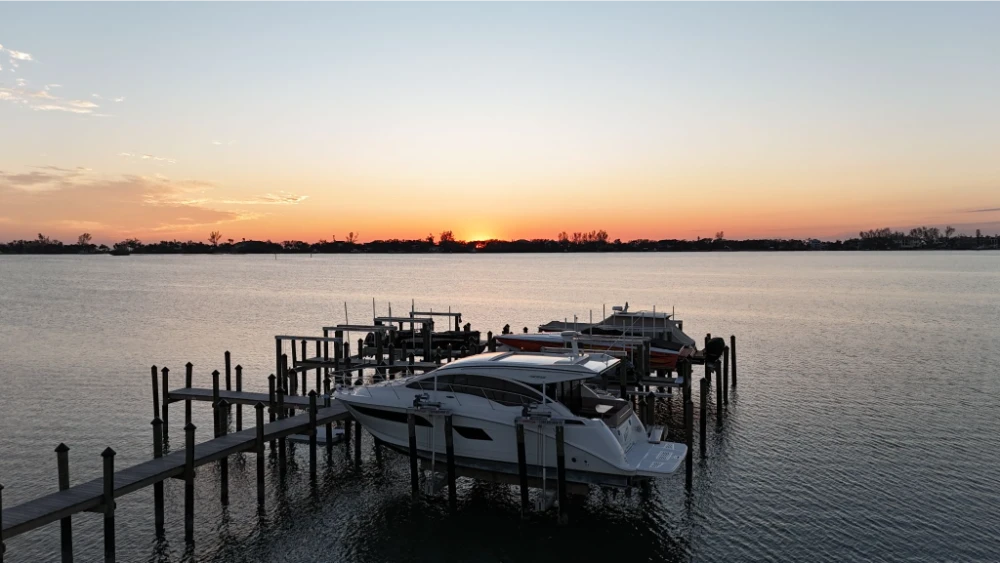
Four-Post Cradle Boat Lifts
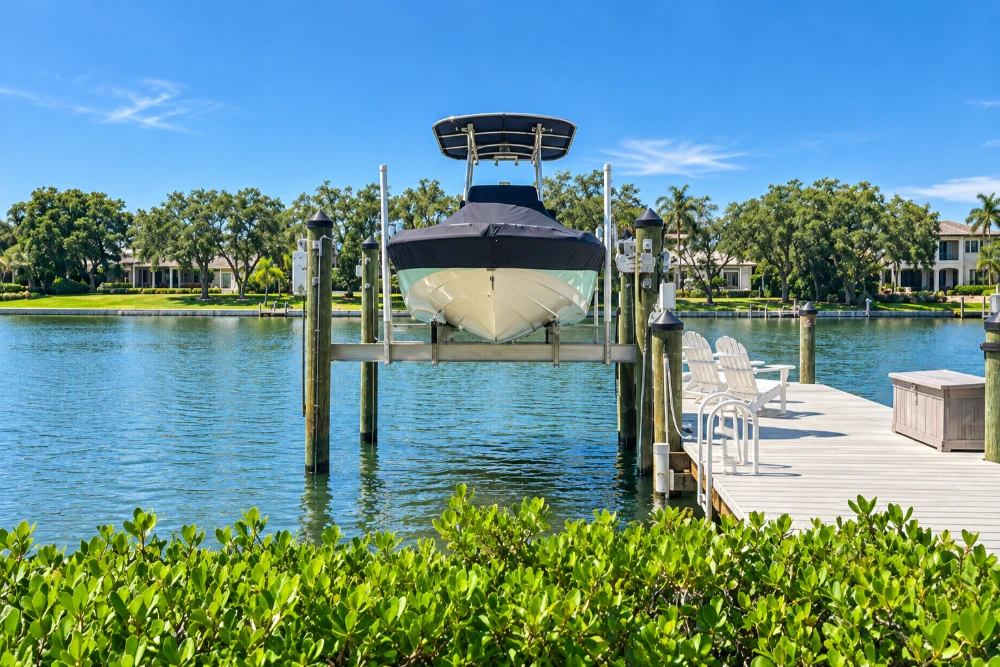
Four-post cradle is one of the best types of boat lifts use four pilings to support a lifting assembly with adjustable bunks that accommodate the boat’s hull. A motorized cable system raises and lowers the cradle vertically, keeping the vessel out of the water during storage. These lifts suit permanent residential slips with sufficient space and properly supported pilings.
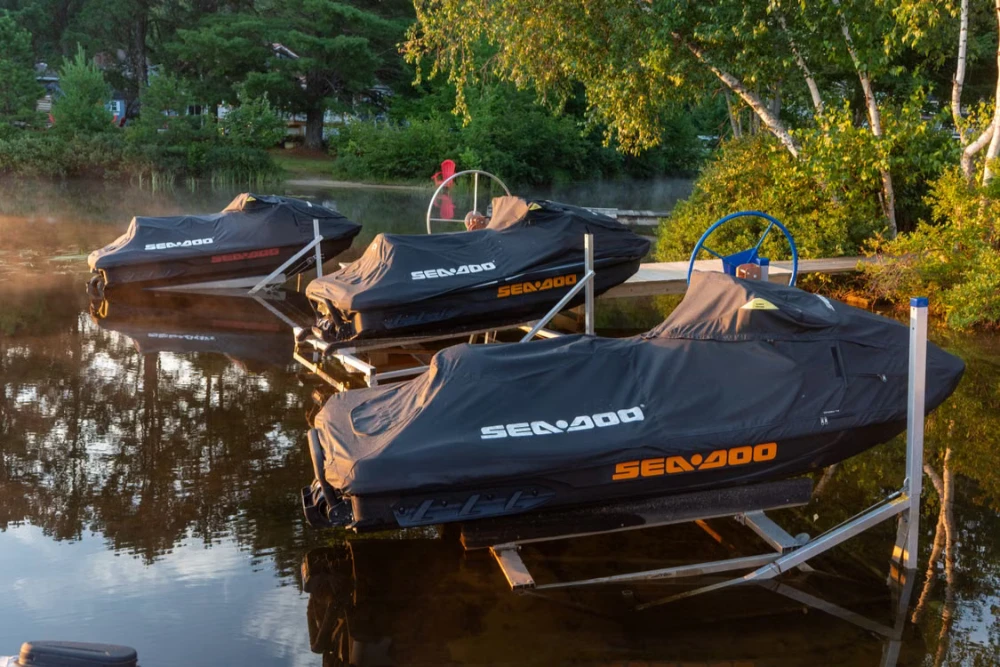
Elevator Boat Lifts
Elevator boat lifts feature a boat-supporting carriage mounted on inclined or vertical guide rails attached to a dock or supporting structure. In cable-driven models, a motorized system moves the carriage to lift the vessel out of the water or lower it for launching.
Unlike four-post cradle lifts, this design does not require four pilings arranged around the boat. It suits narrow canals and restricted dock layouts with sufficient structural support and operating clearance.
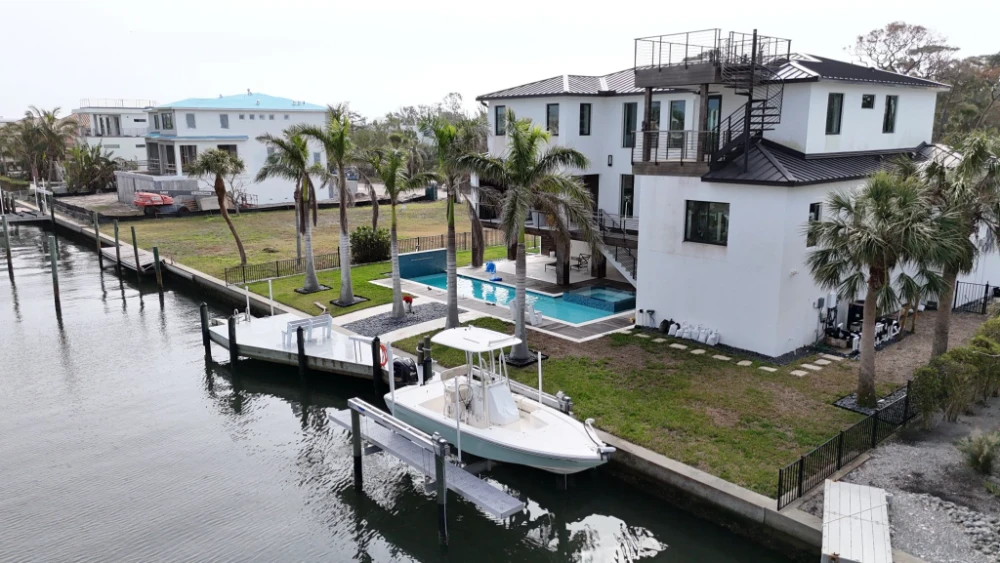
Beamless Boat Lifts
Beamless boat lifts differ from traditional four-post lifts by eliminating overhead beams and typically mounting the lifting equipment on supporting pilings. In cable-driven models, motors and cables raise or lower a cradle fitted with bunks that support the boat’s hull.
The open design provides extra clearance for boats with T-tops, towers, or hardtops while preserving more open waterfront views. These lifts are well suited to residential docks with adequate piling support where easy boat access is a priority.
Floating Boat Lifts
Floating boat lifts are supported by buoyant structures such as pontoons or flotation chambers. In air-controlled models, compressors pump air into the chambers, displacing water to increase buoyancy and lift the boat. Some designs instead use hydraulic cylinders to raise the vessel from a floating support structure.
Their floating structures rise and fall with changing water levels, distinguishing them from fixed-piling boat lift styles. They are suitable for compatible marinas, floating docks, and properly secured moorings.
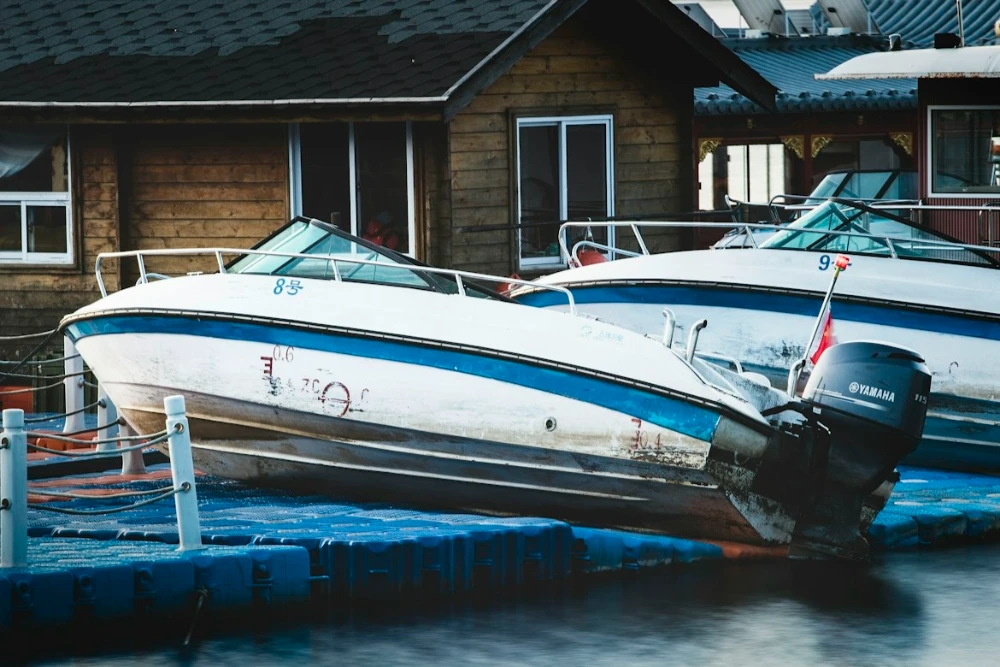
PWC Platform Lifts
Drive-on platforms for personal watercraft (PWCs) and compatible small boats typically use floating surfaces with rollers or guides to help position the hull. For storage, the operator drives the watercraft onto the platform at low speed, following the manufacturer’s instructions. To launch, the watercraft can be pushed back into the water, moved with a launch-assist system, or driven off the platform, depending on the design.
Platform lifts are very upscale & used for PWC and large boats. This is a luxury selling strategy.
These platforms are commonly used for jet skis and boats at residential docks and marinas.
How to Choose the Best Type of Boat Lift for Your Property
The right boat lift depends on your vessel’s size, dock layout, and waterfront conditions. Comparing the different types of boat lifts against these six factors will help you identify suitable options and avoid installation problems.
- Calculate Your Boat’s Fully Loaded Weight and Dimensions: Check the manufacturer’s dry weight and add any excluded engine weight, fuel, water, batteries, gear, and accessories. Record the boat’s length, beam width, and hull shape to determine suitable lift capacity, safety margin, and bunk positioning.
- Measure Water Depth at the Lowest Expected Water Level: Review local tide predictions, including seasonal low-water conditions, and measure the depth at your dock. Compare it with your boat’s draft and the lift’s operating clearance to ensure proper launching and retrieval.
- Evaluate Dock Layout and Structural Support: Measure your slip’s dimensions, piling positions, and available clearance. Have a qualified installer assess existing docks or seawalls to confirm suitable mounting options and identify any necessary structural improvements. Explore our Dock Construction Services if your property needs a new or modified dock.
- Assess Local Water and Environmental Conditions: Check tidal fluctuations, currents, boat wakes, and wave exposure. These conditions influence mounting stability and anchoring requirements. In saltwater areas, prioritize corrosion-resistant materials and hardware suitable for marine environments.
- Compare Operating and Maintenance Requirements: Consider power availability, daily convenience, and servicing access. Cable-driven lifts need cable inspections, hydraulic systems require leak checks, and flotation models need buoyancy and anchoring maintenance. Learn more about boat lift maintenance to understand ongoing care requirements.
- Confirm Installation Feasibility, Permits, and Costs: Arrange a professional site assessment to verify structural compatibility and installation requirements. Check applicable permits or exemptions, then request an itemized estimate covering equipment, installation, necessary modifications, and ongoing maintenance.
The best type of boat lift is ultimately the one that meets your vessel’s requirements and can operate reliably within your property’s specific conditions.
Boat Lift Solutions for Southwest Florida Waterfront Properties
At Triton Dock & Pier, we help homeowners select boat lift configurations suited to their vessels and waterfront properties across Southwest Florida. Local conditions such as saltwater exposure, changing tides, and narrow canals influence which boat lift options work best. Our Boat Lift Services include:
- Cradle Lifts: Provide stable hull support for boats at compatible piling-supported docks.
- Elevator Lifts: Offer space-saving solutions for narrow canals and restricted dock layouts.
- Beamless Lifts: Reduce visible obstructions.
- Custom Yacht Lifts: Accommodate vessel-specific needs with options such as high-speed motors, aluminum bunks, remote controls, and auto-stop systems.
Our team guides you through consultation, design, planning, permitting coordination, and installation.
Conclusion: Choosing the Right Boat Lift
Understanding the different types of boat lifts is essential to finding a system that suits your vessel’s weight, dimensions, and hull design, along with your dock layout and local waterfront conditions. Before making a decision, make sure the lift meets your property’s installation and operating requirements.
For professional guidance, turn to Triton Dock & Pier to explore boat lift solutions tailored to your vessel and waterfront needs. Get a Free Estimate or call us at 941-258-2528 to discuss your project.
Frequently Asked Questions About Boat Lift Types
What Is the Most Common Type of Boat Lifts?
Four-post cradle lifts are among the most common boat lift configurations for residential waterfront properties. They use four pilings and a cable-driven cradle to support and raise boats vertically. Their suitability depends on vessel weight, available space, and piling support.
What Is the Difference Between a Cradle Lift and an Elevator Lift?
Cradle lifts raise boats vertically between supporting pilings, while elevator lifts move vessels along guide rails. Cradle configurations typically require more surrounding space, whereas elevator lifts can accommodate narrower canals and restricted dock layouts with suitable structural support.
What Type of Boat Lifts Is Best for Saltwater?
Corrosion-resistant boat lifts designed for marine environments are best suited to saltwater. Aluminum structures, appropriate stainless steel hardware, and properly protected mechanical components help withstand coastal exposure. The right configuration also depends on tidal conditions, vessel specifications, and maintenance requirements.
Do You Need a Permit to Install a Boat Lift in Florida?
Yes. Boat lift installations in Florida require permitting, which may involve local, state, and federal approvals depending on your location. Our team can help guide you through the permitting process so your project stays compliant from start to finish.
How Long Does a Boat Lift Typically Last?
A boat lift typically lasts 10-20 years, while well-maintained systems may last 25 years or longer. Actual lifespan depends on materials, saltwater exposure, usage, and maintenance. Cables, motors, and hydraulic components may need attention sooner, including professional boat lift repairs when necessary.